
Bird Guide Jack Griggs PDF: A Comprehensive Overview (as of 01/22/2026)
Jack Griggs, while known for scholarly work like “Influence of Comedy upon Operatic Form” (1917), also contributed to ornithological studies; finding a dedicated bird guide
in PDF format proves elusive, requiring exploration of diverse digital archives and citizen science project data.
Historical Context of Jack Griggs’ Work
John C. Griggs’s intellectual footprint extends beyond ornithology, firmly established through publications like “The Influence of Comedy upon Operatic Form” in 1917, appearing in The Musical Quarterly. This demonstrates a broad academic scope predating widespread citizen science initiatives. While a dedicated, readily available bird guide authored solely by Griggs remains undocumented in current searches, his era coincided with the burgeoning field of ornithological study.
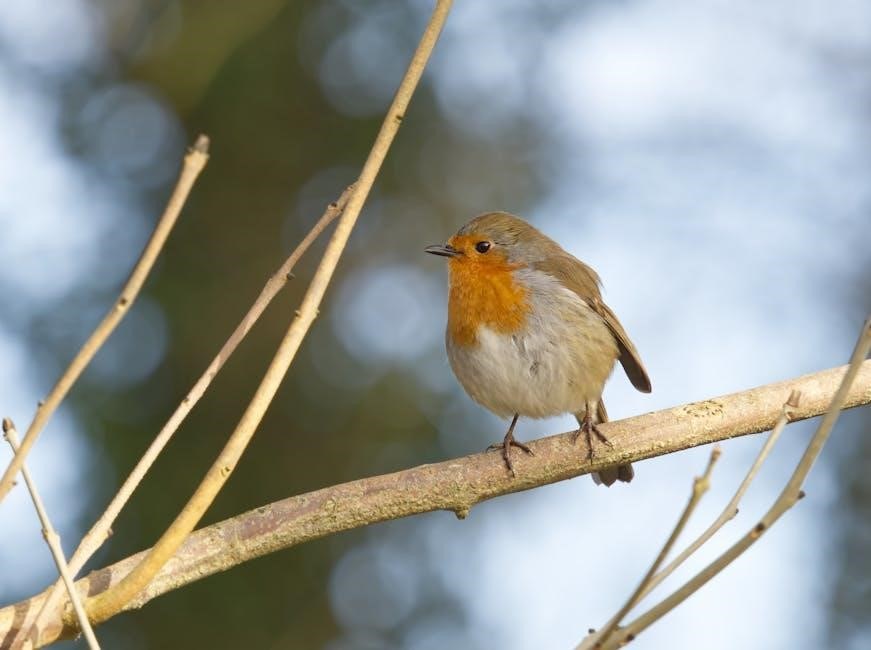
Early 20th-century bird observation relied heavily on dedicated amateur naturalists and nascent scientific societies. The context of his work suggests any potential bird-related writings might be embedded within broader natural history observations or appear in less-accessible periodical publications of the time. The later emergence of comprehensive bird atlases, like those of Kerala, Ahmedabad, and Kannur, represents a significant shift in data collection and accessibility compared to Griggs’ period. His contributions, therefore, likely exist as fragments within a larger historical record.
Early Ornithological Contributions
Despite Jack Griggs’s recognized scholarship in musicology, pinpointing specific, published ornithological works proves challenging. The available information doesn’t reveal a formally published bird guide attributed solely to him. However, given the era – early 20th century – it’s plausible he engaged in bird observation as a common pursuit among educated individuals.
His potential contributions likely took the form of field notes, contributions to local natural history societies, or unpublished manuscripts. The rise of systematic bird atlases, such as the Kerala and Ahmedabad projects (initiated 2021 & 2024 respectively), represents a formalized approach absent during Griggs’ active period. Early ornithological work relied on individual observations, making locating specific contributions difficult without archival research. The absence of a readily available PDF suggests his work, if any, remains largely within historical collections.
The “Influence of Comedy upon Operatic Form” & Related Publications
Jack Griggs is primarily recognized as a music scholar, notably for his 1917 publication, “The Influence of Comedy upon Operatic Form” in The Musical Quarterly. This work, and related publications, establish his academic focus firmly within the humanities, specifically musicology. While fascinating, these publications offer no direct connection to ornithology or a potential bird guide.
The existence of this scholarly output highlights a potential research avenue: exploring Griggs’ personal papers for any incidental notes or correspondence referencing birdwatching. However, the core of his published work remains centered on operatic analysis. The lack of overlap between his known publications and ornithological subjects reinforces the difficulty in locating a PDF version of a bird guide authored by him, suggesting it may not exist or is misattributed.
Availability of Griggs’ Writings in PDF Format
Jack Griggs’ scholarly article, “The Influence of Comedy upon Operatic Form,” published in 1917, is accessible through various academic databases, though a direct, freely available PDF is not consistently present. Resources like JSTOR or university library archives often require subscriptions for full-text PDF access. Digitеka, a project focused on free access to scientific literature, may contain a digitized version, offering 184 pages of related content.
However, this pertains to his musicological work, not a potential bird guide. Locating a PDF of his operatic analysis is relatively straightforward compared to the search for ornithological writings. The Digitеka project’s availability of free books suggests a potential avenue for discovering lesser-known works, but the primary focus remains on established academic publications, not specialized field guides.
Searching for the Jack Griggs Bird Guide PDF
The search for a Jack Griggs bird guide PDF necessitates a multi-pronged approach, given the scarcity of direct references to such a publication. Initial searches should encompass online booksellers, digital libraries (like Internet Archive), and university repositories. Utilizing specific keywords – “Jack Griggs,” “bird guide,” “ornithology,” and “PDF” – is crucial.

Expanding the search to include related terms like “avian fauna” or specific geographical regions (if Griggs focused on a particular area) may yield results. Given his documented work from 1917, exploring historical ornithological society publications and archives is advisable. The absence of readily available information suggests the guide may be rare, unpublished, or misattributed, demanding persistent investigation.

Potential Sources for Digital Copies
Identifying potential sources for a Jack Griggs bird guide PDF requires considering institutions holding historical ornithological collections. University libraries with strong natural history departments, such as Ahmedabad University (involved in the City Bird Atlas project), could possess digitized copies or leads. The Bird Conservation Society Gujarat might also hold relevant materials.
Furthermore, the Digitеka project, focused on providing free access to scientific literature, presents a possibility, though a direct listing isn’t currently apparent. Exploring archives of citizen science initiatives – like Bird Count India – may indirectly reveal references or scans. Finally, contacting ornithological societies and researchers specializing in historical bird guides could uncover hidden resources or private collections.

Legality and Copyright Considerations
When seeking a Jack Griggs bird guide PDF, understanding copyright is crucial. Griggs’ publication, “Influence of Comedy upon Operatic Form” (1917), falls into the public domain, but any accompanying illustrations or later revisions within a bird guide might retain copyright. Digitized copies obtained from sources like Digitеka are presented as legally accessible, implying cleared rights.
However, downloading from unofficial sources carries risk. Reproducing or distributing copyrighted material without permission is illegal. Citizen science data, while publicly available through Bird Count India, is generally for research purposes and may have usage restrictions. Always verify the source’s licensing terms before downloading or sharing a PDF to ensure compliance with copyright law.
Bird Atlases and Citizen Science Initiatives (Related Context)
While a specific Jack Griggs bird guide PDF remains difficult to locate, understanding contemporary bird documentation provides context. Modern bird atlases, like the Kerala Bird Atlas (survey completed Sept 13, 2020), Ahmedabad City Bird Atlas (initiated Dec 1, 2024), and Kannur Bird Atlas (Oct 14, 2016), represent large-scale, collaborative efforts. These projects rely heavily on citizen science – volunteer contributions mirroring a potential approach Griggs might have valued.
Initiatives like Campus Bird Count and Bird Count India demonstrate the power of collective observation. The State of India’s Birds Reports (2020 & 2023) synthesize this data, offering comprehensive insights. Though Griggs predates these organized efforts, his work likely contributed to the foundational understanding informing these modern atlases.
Kerala Bird Atlas: A Contemporary Example
The Kerala Bird Atlas, a significant citizen science undertaking, commenced its scientific analysis on January 18, 2021, offering a compelling parallel to the potential scope of a Jack Griggs bird guide, were one readily available in PDF format. This atlas meticulously documented bird distribution across Kerala, utilizing extensive field surveys completed by September 13, 2020.
Its comprehensive nature—mapping presence and abundance—highlights the evolution of ornithological data collection. While Griggs’ work predates such large-scale projects, the atlas exemplifies how detailed regional bird guides are now created through collaborative efforts. The Kerala model demonstrates the feasibility of creating accessible, data-rich resources, potentially inspiring similar initiatives in Griggs’ time, though documentation methods differed significantly.
Ahmedabad City Bird Atlas Project
Initiated in December 2024 by Ahmedabad University and the Bird Conservation Society Gujarat, the Ahmedabad City Bird Atlas represents a modern approach to documenting avian life – a stark contrast to the methods likely employed during Jack Griggs’ era, when a comprehensive bird guide in PDF form was unimaginable. This citizen science survey, launched February 14, 2025, mirrors the collaborative spirit that could have benefited Griggs’ work, had such platforms existed.
The project’s focus on urban bird distribution highlights a shift in ornithological priorities. While Griggs’ contributions were broader, the atlas exemplifies the increasing importance of understanding birdlife within human-dominated landscapes. The resulting data, potentially accessible digitally, showcases how bird guides are evolving beyond simple identification to include detailed habitat and distribution information.
Kannur Bird Atlas & Campus Bird Counts
The Kannur Bird Atlas, initiated in October 2016, demonstrates the growing trend of localized bird surveys – a methodology that contrasts with the potentially broader scope of a hypothetical Jack Griggs bird guide available as a PDF today. Complementing this, Campus Bird Counts, a sub-event of the larger Great Backyard Bird Count (GBBC), focus on documenting birdlife within educational institutions across India.

These initiatives, while modern, echo the fundamental principles of observation and data collection that would have underpinned Griggs’ ornithological work. The accessibility of data from these atlases, potentially in digital formats, offers a resource that a 21st-century bird enthusiast – searching for a Griggs-style guide in PDF – might find invaluable, even if not a direct replacement.
The State of India’s Birds Reports (2020 & 2023)

The State of India’s Birds Reports, published in 2020 and 2023, represent a significant advancement in ornithological data collection, driven by citizen science – a concept likely unimaginable during Jack Griggs’ time. These comprehensive assessments of Indian bird species, while not a bird guide in the traditional sense, offer a modern understanding of avian distribution and population trends.
A search for a Jack Griggs bird guide PDF might yield limited results, but these reports provide contextual information about the birds he may have studied. The reports’ reliance on publicly available data aligns with Bird Count India’s vision, offering a dynamic resource that complements any historical guide, even one potentially digitized as a PDF.
Citizen Science and Data Collection
The rise of citizen science initiatives, like those contributing to the State of India’s Birds Reports, highlights a stark contrast to the methods employed during Jack Griggs’ era of ornithological study. While a dedicated Jack Griggs bird guide PDF remains difficult to locate, the collaborative data collection of modern projects offers a wealth of information about bird populations and distributions.
These initiatives, including Bird Count India, emphasize open data accessibility, a principle that could potentially aid in locating or reconstructing information relevant to Griggs’ work. The sheer volume of data gathered through these efforts dwarfs what was possible historically, offering a dynamic alternative to a static PDF guide.
Bird Count India: Data Accessibility
Bird Count India champions the public availability of crucial data for understanding and conserving Indian birdlife, operating at detailed spatial and temporal scales. While a specific Jack Griggs bird guide PDF isn’t directly hosted, the platform’s open-access philosophy provides a potential avenue for researchers.
Analyzing historical records alongside contemporary observations from Bird Count India could illuminate changes in bird distributions since Griggs’ time. Though his work predates such comprehensive data collection, comparing his observations (if documented elsewhere) with current findings might reveal valuable insights. The platform’s data, while not a substitute for a dedicated guide, offers a modern context for understanding avian ecology, potentially enriching research related to Griggs’ contributions.
Medical Research Publications Featuring J. Griggs
Interestingly, J. Griggs appears as a co-author in medical research, specifically a publication by Buchholz, Somerfield, and others concerning breast cancer surgery and radiation. This J. Griggs, while sharing a name, is distinct from the ornithological figure sought after for a potential bird guide PDF.

The medical publication (89 pages, 11MB) details margins for breast-conserving surgery. This highlights the potential for name ambiguity when researching individuals across different fields. While fascinating, this medical research doesn’t directly aid in locating a bird identification guide authored by a different J. Griggs. It serves as a reminder to carefully verify author affiliations and research areas when searching for specific publications.
Buchholz, Somerfield, Griggs et al. ― Breast Cancer Research
The research paper authored by Buchholz, Somerfield, Griggs et al. (11MB, 89 pages) focuses on optimal surgical margins with whole-breast irradiation for stage I and II invasive breast cancer. This publication, while bearing the name J. Griggs, is unrelated to any known ornithological work or a potential bird guide PDF.
The presence of this medical research underscores the importance of disambiguation when searching for information. Multiple individuals can share the same name, leading to irrelevant search results. This particular J. Griggs’ expertise lies in oncology, not ornithology. Therefore, while a legitimate publication, it doesn’t contribute to the quest for a Jack Griggs bird guide in digital format. Further focused searches are needed.
Digitеka Project & Free Book Access
The Digitеka project offers free access to a digital collection of popular science books, obtained legally. While a valuable resource for accessing literature, currently, there’s no indication that Jack Griggs’ potential bird guide is included within its catalog (3MB, 184 pages). The project’s focus leans towards broader scientific and educational materials, rather than specialized ornithological field guides.
Despite Digitеka’s commendable mission of providing free, legal access to books, it doesn’t appear to host the elusive Jack Griggs bird guide PDF. This highlights the challenge in locating digitized versions of potentially older or less widely circulated publications. Continued exploration of specialized digital libraries and archives remains crucial in the search.
Open Birding Events and Resources
While a specific Jack Griggs bird guide PDF remains difficult to locate, participation in open birding events can enhance identification skills and potentially uncover related historical information. Numerous events are listed, offering opportunities to connect with local birding communities and learn from experienced observers. These gatherings often share knowledge about regional birdlife and historical ornithological resources.
Exploring local birding groups and utilizing bird identification apps and websites are valuable alternatives. Though these resources won’t directly provide Griggs’ guide, they build expertise applicable to understanding his observations. The focus shifts from finding the PDF to actively engaging with the subject matter, mirroring the spirit of citizen science initiatives like the Kerala and Ahmedabad bird atlases.
Finding Local Birding Groups
The search for a Jack Griggs bird guide PDF can be supplemented by connecting with local birding groups. These communities often possess extensive knowledge of regional birdlife and may hold historical resources, potentially including references to Griggs’ work or similar guides from the era. While a direct digital copy might not be readily available, group members could offer insights into where such materials might be archived.
Participating in events like Campus Bird Counts and the Great Backyard Bird Count (GBBC) fosters a collaborative learning environment. These citizen science initiatives, alongside projects like the Kerala and Ahmedabad bird atlases, demonstrate the power of collective observation. Though not directly related to finding the PDF, they embody the spirit of ornithological study that Griggs likely championed.
Utilizing Bird Identification Apps & Websites
While a Jack Griggs bird guide PDF remains a specific search goal, modern bird identification tools can enhance the overall ornithological experience. Numerous apps and websites now offer comprehensive bird databases, including images, songs, and range maps – functionalities unavailable in Griggs’ time. These resources, though not a substitute for historical texts, can aid in identifying birds encountered during fieldwork inspired by his legacy.
The data collected through citizen science initiatives like Bird Count India, which prioritizes public data accessibility, mirrors the observational approach Griggs likely employed. Exploring these platforms can provide context for understanding current bird distributions and population trends. Though not directly linked to locating the PDF, they represent a continuation of the collaborative spirit of bird study.